The Life and Legacy of Ndugu M’Hali
Remembered by history as Kalulu
His life was brief. His photograph survived. His voice did not.
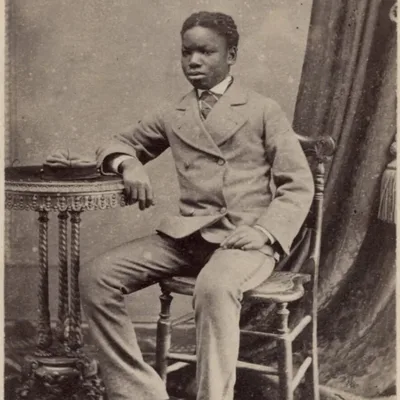
More than 150 years later, the young boy staring back at us from the photographs of Victorian explorers deserves to be remembered not simply as someone’s servant, companion or adopted son, but as a child who had a name and a life of his own.
His name was Ndugu M’Hali.
A Childhood History Barely Recorded
Ndugu M’Hali was born in East Africa around 1865. History tells us remarkably little about the beginning of his life.
We do not know with certainty the names of his mother and father. We do not know where he spent his earliest years, what made him laugh, who cared for him, or what dreams a young Ndugu might have carried.
What survives in the historical record begins largely when his childhood became entangled with the East African slave trade.
He was still a very young boy.
Around 1871, Ndugu M’Hali came into the care and household of British-American explorer Henry Morton Stanley, who was travelling through East Africa during the expedition that would make Stanley internationally famous.
It was Stanley who gave him the name by which history would eventually remember him:
Kalulu.
The name was associated with a small antelope, reportedly chosen because of the boy’s appearance and quickness.
But before Kalulu, there was Ndugu M’Hali.
And that distinction matters.
A Child Between Two Worlds
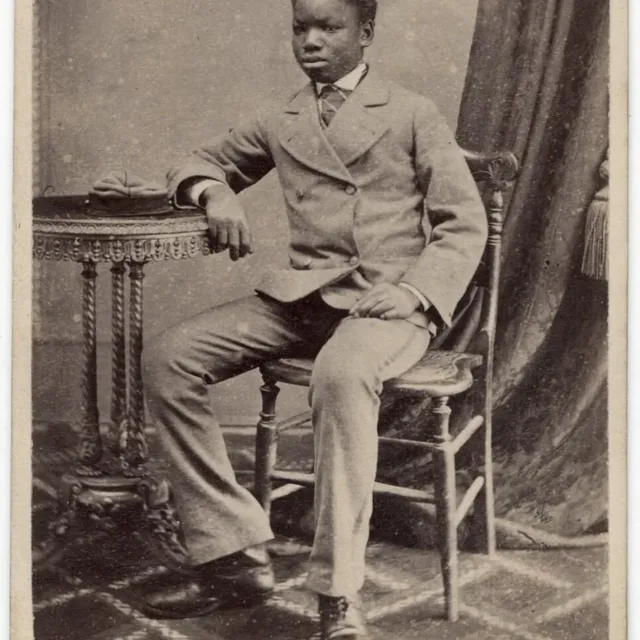
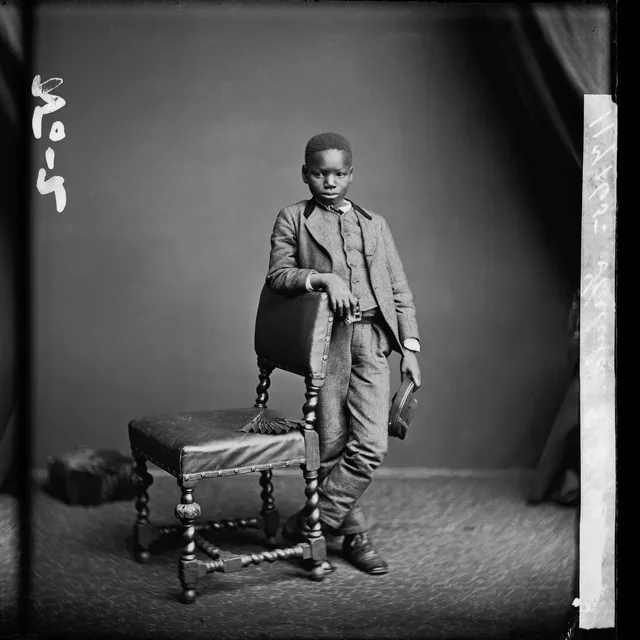
His life soon took a journey almost unimaginable for an East African child of his time. Ndugu travelled with Stanley beyond Africa. He crossed the sea and experienced Europe and America. He lived for a period in England and attended school in London.
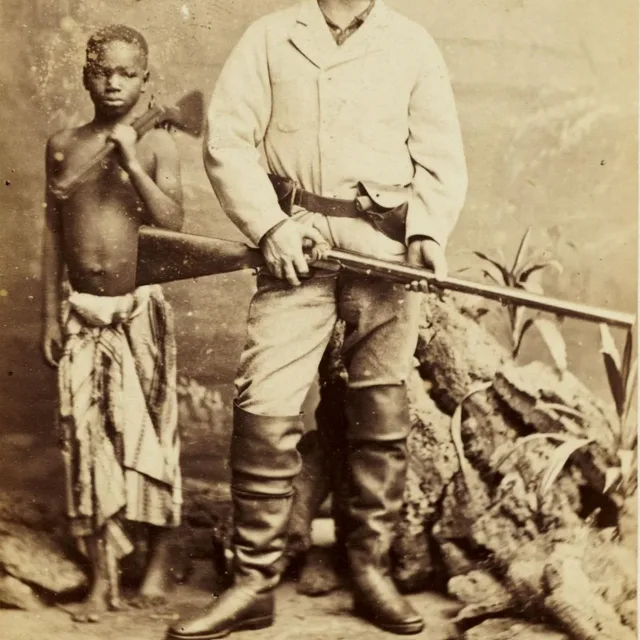
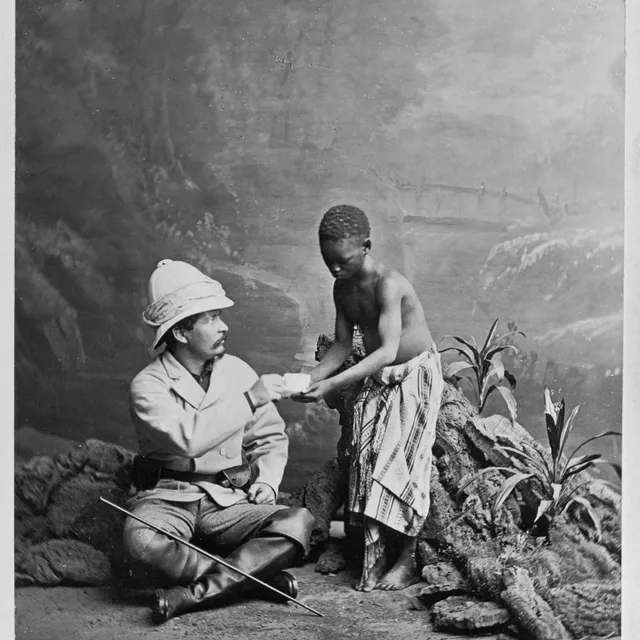
He also appeared in photographs alongside Stanley. One of the best-known portraits shows Stanley dressed in the familiar clothing of a Victorian explorer, holding a rifle, with young Ndugu standing beside him.
To generations who later encountered the photograph, the boy could easily become part of the background to the story of a famous explorer.
Yet he was not a background.
He was a human life.
He was a child experiencing places, languages and cultures far removed from the world into which he had been born.
Whatever he thought about these extraordinary experiences is largely lost to us. History preserved what others wrote about him, but very little of what Ndugu himself thought, felt or wanted.
The Journey Back to Africa
Eventually, Ndugu returned to Africa with Stanley.
In 1874, Stanley began another enormous expedition through Central Africa, one that would take his party through lakes, forests and the vast river systems of the continent. Ndugu accompanied him. Little did he know, he would never complete the journey. On 28 March 1877, while the expedition was navigating dangerous waters along the Lualaba-Congo River system, tragedy struck.
A canoe was caught by the powerful current and swept toward the rapids. Ndugu M’Hali was among those who drowned. He was only about twelve years old.
A life that had already crossed continents and oceans ended before adulthood had even begun. Stanley was deeply affected by his death and subsequently associated the place with the name Kalulu Falls, preserving the name he had given the boy.
Remember Him by His Name.
For generations, Ndugu M’Hali has often appeared in history as a footnote in the story of Henry Morton Stanley.
The African boy beside the explorer.
The servant.
The companion.
The adopted son.
The boy called Kalulu.
But perhaps remembrance allows us to look at the photograph differently:
Look beyond Stanley.
Look at the child standing beside him.
That child had already lived through circumstances no child should have experienced. He had travelled thousands of kilometres from his homeland. He had crossed oceans, walked through Victorian London and returned to the vast interior of Africa.
And then, before he had the opportunity to tell his own story, he was gone.
We cannot restore the childhood that history took from him.
We cannot ask him what he remembered of home.
We cannot know what he dreamed of becoming.
But we can restore something very simple:
his name.
He was Ndugu M’Hali.
Born around 1865.
Gone on 28 March 1877.
Only a child.
And after more than a century, still worthy of being remembered.
May his name endure. May his story continue to be told.